Publications
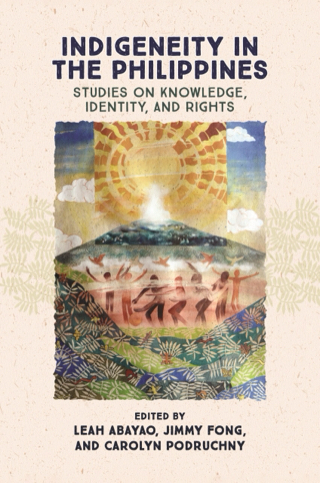
In the Philippines, the concept of Indigeneity is deeply intertwined with colonial history, a pattern echoed across the globe. Yet, its manifestation in the Philippines bears distinct features. This volume brings together scholars working on Indigenous communities in the Philippines, exploring questions of knowledge, identity, and rights across diverse cultural landscapes. The fourteen essays are organized into four sections: Defining Indigenous Peoples and Their Rights, Indigenous Knowledge, Colonialism, and Making Identities. Most essays focus on northern Luzon’s Cordillera region, though some address Philippine diasporas.
Table of Contents
Introduction
- “Situating the Philippines in Global Indigeneity” — Carolyn Podruchny, Leah Abayao, Jimmy Fong
Part 1: Defining Indigenous Peoples and Their Rights
- “(De)Constructions of Indigeneity in the Philippines” — Oona Paredes, J. A. Ruanto-Ramirez
- “Erasure and (re)Emergence: Finding the ‘Native’ in Cariño v. Insular Government (1909)” — Karminn C. D. Daytec Yañgot, Jansen Taruc Nacar
- “Violating Indigenous Peoples’ Rights, Resisting Mega-Dam Projects: A Philippine Case Study” — Fernan Talamayan
Part 2: Indigenous Knowledges
- “Indigenous Knowledge of the Concepts of Time among the Bontok of the Cordillera, Northern Philippines” — June Chayapan Prill-Brett
- “Memories of Ritual, Act” — Kyla Agnes L. Ramirez, Michelle L. Villavert, Jose R. Taton, Merry Grace Valencia-Furtuna
- “Reading Lambrecht: Re-Imagining Indigenous Subject Positioning from Translated Folktales” — Roland Erwin P. Rabang
- “Transfer of Knowledge among the Ibaloy of Upper Loacan (Itogon): The Value of Intergenerational Workshops in Turbulent Times” — Antoine Laugrand, Frédéric Laugrand, Gliseria Magapin, Jazil Tamang
- “Indigenous Peoples Education: Creating Opportunities for Competence-Building” — Maileenita A. Peñalba
Part 3: Colonialism
- “The Chevalier in the Cordilleras: A Rhetorical Analysis of Paul P. de la Gironière’s Travel Writings in the Land of the Tinguian” — Io M. Jularbal
- “Masculinity and Misperformance: The Death of William Jones among the Ilongots, 1909” — Juan Fernandez
Part 4: Making Identities
- “Sonic Frictions of an Igorot Becoming at the Lang-ay Festival” — Lisa Decenteceo
- “Building Sustainable Futures: Lessons from an Indigenous Community in the Margins” — Maria Cecilia T. Medina
- “Redefining Indigeneity in Diasporic Igorots’ Social Media” — Ruth M. Tindaan
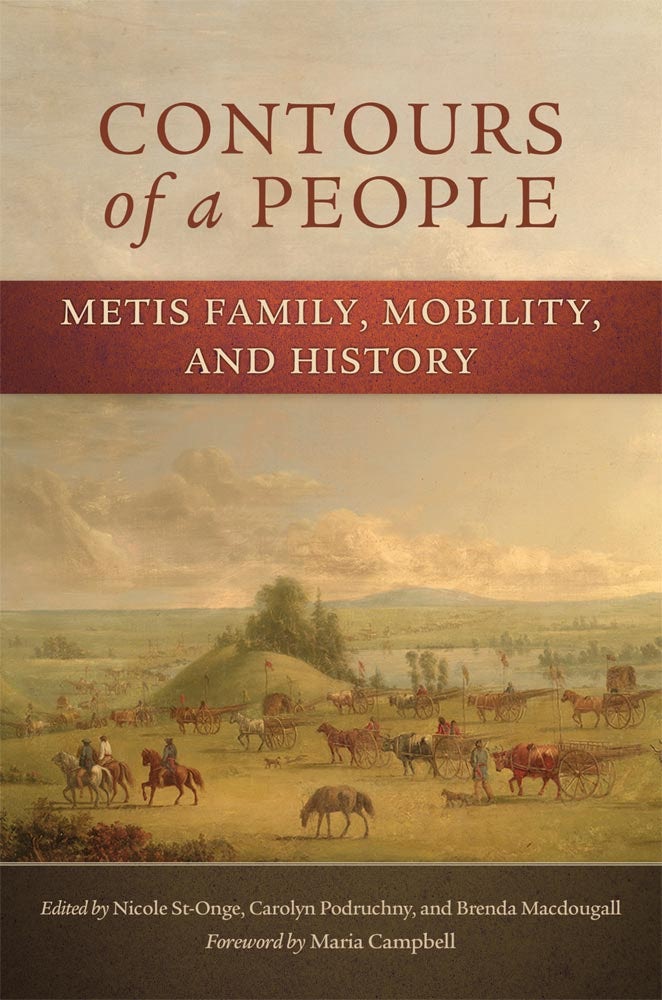
The Métis world spanned the better part of a continent. Volume editors Nicole St-Onge, Carolyn Podruchny, and Brenda Macdougall go beyond the concern with race and ethnicity that takes centre stage in most discussions of Métis culture to offer new ways of thinking about Métis identity. The chapters span a wide geographic area in northwestern North America — from Montana to Alaska, from British Columbia to the Great Lakes — addressing questions from the beginnings of the Métis in the Great Lakes region in the late seventeenth century to contemporary issues of definition and rights in Canadian law.
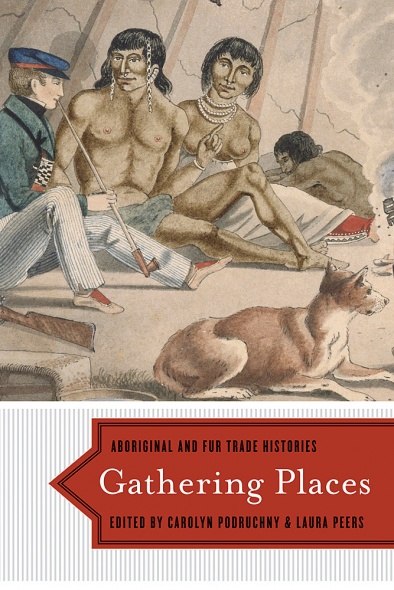
British traders and Ojibwe hunters. Cree women and their metis daughters. Explorers and anthropologists and Aboriginal guides and informants. These people, their relationships, and their complex identities and worldviews were not featured in histories of North America until the 1970s, when scholars from multiple disciplines began to bring new perspectives and approaches to bear on the past.
Gathering Places presents some of the most innovative and interdisciplinary approaches to metis, fur trade, and First Nations history being practised today. Whether they are discussing dietary practices on the Plateau, trees as cultural and geographical markers in the trade, the meanings of totemic signatures, issues of representation in public history, or the writings of Aboriginal anthropologists and historians, the authors link archival, archaeological, material, oral, and ethnographic evidence to offer novel explorations that extend beyond earlier scholarship centred on the archive. They draw on Aboriginal perspectives, material forms of evidence, and personal approaches to history to illuminate cross-cultural encounters and challenge older approaches to the past.
The diverse chapters in this volume take this disciplinary history as their starting point and show the new directions in which Aboriginal history is moving. They highlight issues associated with the new methodology, especially the close reading and use of disparate kinds of sources — archival, oral, material, and fieldwork data — in tandem. They explore cross-cultural and intracultural issues of power, both in the past and in the production of scholarly knowledge in the present.
Table of Contents
- “Complex subjectivities, multiple ways of knowing: Introduction” — Laura Peers and Carolyn Podruchny
Section 1: Using Material Culture
- “Putting Up Poles: Power, Navigation, and Cultural Mixing in the Fur Trade” — Carolyn Podruchny, Frederic W. Gleach and Roger Roulette
- “Dressing for the Homeward Journey: Western Anishnaabe Leadership Roles Viewed Through Two Nineteenth-Century Burials” — Cory Willmott and Kevin Brownlee
Section 2: Using Documents
- “Anishinaabe ‘toodaims’: Contexts for Politics, Kinship and Identity in the Eastern Great Lakes” — Heidi Bohaker
- “The Contours of Everyday Life: Food and Identity in the Plateau Fur Trade” — Elizabeth Vibert
- “Make it last forever as it is: John McDonald of Garth’s Vision of a Native Kingdom in the North-West” — Germaine Warkentin
Section 3: Ways of Knowing
- “Being and Becoming Métis: A Personal Reflection” — Heather Devine
- “Historical Research and the Place of Oral History: Conversations from Berens River” — Susan Elaine Gray
Section 4: Ways of Representing
- “Border Identities: Métis, Halfbreed and Mixed-blood” — Theresa Schenck
- “Edward Ahenakew’s Tutelage by Paul Wallace: Reluctant Scholarship, Inadvertent Preservation” — David R. Miller
- “Aboriginal History and Historic Sites: The Shifting Ground” — Laura Peers and Robert Coutts
Afterword
- “Aaniskotaapaan, Generations and Successions” — Jennifer S. H. Brown
French Canadian workers who paddled canoes, transported goods, and staffed the interior posts of the northern North American fur trade became popularly known as voyageurs. Scholars and public historians alike have cast them in romantic roles of rugged and merry heroes who paved the way for European civilization in the wild northwest. This book looks past the stereotypes and reveals the contours of voyageurs’ lives, world views, and values.
Making the Voyageurs’ World argues that voyageurs created distinct identities shaped by their French-Canadian peasant roots, the Aboriginal peoples they met in the northwest, and the nature of their workplace as indentured servants in diverse environments. Voyageurs’ identities were also shaped by the liminality inherent in their constant travels and by their own masculine ideals that emphasized strength, endurance and daring. Although voyageurs left few conventional traces of their own voices in the documentary record, an astonishing amount of information can be found in descriptions of them by their masters, explorers and other travelers.
Table of Contents
- Introduction: Sons of the Farm, the Trade, and the Wilderness
- Leaving Home: Family and Livelihood in French Canada and Beyond
- Rites of Passage: Voyageur Cosmology
- It is the Paddle That Brings Us: Voyageurs Working in Canoes
- The Theater of Hegemony: Masters, Clerks, and Servants
- Rendezvous: Parties, Tricks, and Friendships
- En Dérouine: Life at Interior Fur Trade Posts
- Tender Ties, Fluid Monogamy, and Trading Sex: Voyageurs and Aboriginal Women
- Disengagement: Going Home and Going Free
- Conclusion: Carrying the World
In 1497, explorers from the confident world of Renaissance Europe sailed, under Captain Giovanni Caboto, into what are now Canadian waters. This significant encounter brought into contact two worlds equally ignorant of each other and set in motion a number of events that culminated in the birth of a new nation. The Renaissance, ordinarily thought of as an entirely European-centred phenomenon, is “de-centred” in these eighteen innovative essays.
They explore not only how the European Renaissance helped form Canada, but also how more significantly the experience of Canada touched the Renaissance and those who first came to the shores of North America. Representing a range of disciplines, including literature, anthropology, biology, history, linguistics, and anthropology, this work re-thinks traditional notions of Canada and of the Renaissance.
Table of Contents
- “Introduction: ‘Other Land Existing’” — Germaine Warkentin and Carolyn Podruchny
Part I: Methods
- “Polarities, Hybridities: What Strategies for Decentring?” — Natalie Zemon Davis
- “Inclusive and Exclusive Perceptions of Difference” — Deborah Doxtator
- “Plunder or Harmony? On Merging European and Native Views of Early Contact” — Toby Morantz
- “Memoria as the Place of Fabrication of the New World” — Gilles Thérien
Part II: Mentalités / Debwewin
- “The Sixteenth-Century French Vision of Empire” — Olive Patricia Dickason
- “The Mentality of the Men behind Sixteenth-Century Spanish Voyages to Terranova” — Selma Huxley Barkham
- “Relocating Terra Firma: William Vaughan’s Newfoundland” — Anne Lake Prescott
- “Images of English Origins in Newfoundland and Roanoke” — Mary C. Fuller
- “From the Good Savage to the Degenerate Indian” — Réal Ouellet with Mylene Tremblay
Part III: Translatio Fide
- “Few, Uncooperative, and Ill Informed?” — Luca Codignola
- “Canada in Seventeenth-Century Jesuit Thought” — Peter A. Godard
- “A New Loreto in New France” — André Sanfaçon
Part IV: Decentring at Work
- “The Delights of Nature in This New World” — Lynn Berry
- “The Beginning of French Exploration out of the St. Lawrence Valley” — Conrad E. Heidenreich
- “The Earliest European Encounters with Iroquoian Languages” — Wallace Chafe
- “Decentring Icons of History: Exploring the Archaeology of the Frobisher Voyages” — Réginald Auger et al.